33rd Sunday in Ordinary Time, Year A
Matthew 25:14-30
Fr. Jijo Kandamkulathy CMF
Claretian Missionaries
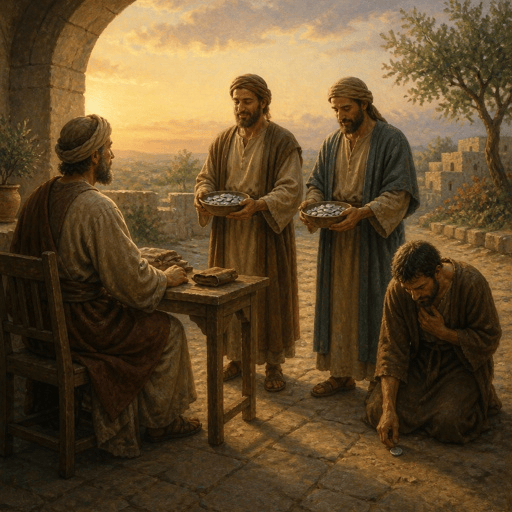
We have misunderstood this parable for a long time. We have turned it into a lesson about natural abilities. We tell children that God has given them talents—to sing, to dance, to study, to play. We tell adults that their skills are the talents and that they must use them well. This is not wrong, but it is a distraction. Because the talent in the parable is not a human ability. The talent is the Word of God. The talent is the Gospel. The talent is the deposit of faith entrusted to every baptized person. And the abilities are the particular skills, circumstances, and capacities each of us brings to the task of living that Word.
The master distributes his property according to each servant’s ability. He does not give the same amount to all. One receives five talents. Another receives two. Another receives one. The master knows his servants. He knows what they can carry. He knows what they can handle. He does not overwhelm the weak. He does not undervalue the strong. He gives according to capacity. And even the one who receives a single talent receives an enormous sum—roughly twenty years of wages. No one is given a small gift. No one is given an insignificant trust. The Word of God is always an immense treasure.
The first two servants trade with what they have received. They work with the Word. They risk it. They invest it. They let it move through their hands and multiply. They do not hoard it. They do not bury it. They do not treat it as a museum piece to be preserved. They live it. They share it. They let it shape their decisions, their relationships, their daily choices. And the Word grows. It bears fruit. It returns with interest. Not because they were clever. Not because they were ambitious. But because they were faithful. They took the Word seriously enough to risk it.
The third servant does none of this. He digs a hole and buries the Word in the ground. He keeps it safe. He preserves it. He guards it. He does nothing with it. And when the master returns, he offers an explanation. “Master, I knew you were a demanding person, harvesting where you did not plant and gathering where you did not scatter; so out of fear I went off and buried your talent in the ground.”
Notice the diagnosis. It is not laziness that paralyzed him. It is fear. And the fear comes from a distorted image of the master. He sees the master as demanding, harsh, unfair. He sees him as one who takes what does not belong to him. He sees him as a threat rather than a giver. And because he sees the master this way, he cannot risk. He cannot invest. He cannot move. He can only bury. His image of God is so distorted that it kills his faith.
This is the psychospiritual heart of the parable. Our image of God determines whether we risk or whether we bury. If God is a demanding judge, we will serve out of fear. We will keep the rules. We will preserve the form. But we will never risk. We will never invest. We will never let the Word move through us into the world. We will bury it. We will keep it safe. We will keep it hidden. And the Word will not grow. It will not multiply. It will not bear fruit. Because we were too afraid of the master to trust him.
But the master is not the harsh man the third servant imagines. The master is the one who entrusted his property to his servants in the first place. He is the one who gave according to ability. He is the one who went away and let them work. He is the one who returns not to punish but to receive. The first two servants enter into the joy of their master. They are not rewarded because they produced more. They are rewarded because they were faithful. They trusted the master enough to risk what he had given them.
The third servant does not lose his talent because he failed to produce. He loses it because he failed to trust. He buried the Word because he was afraid. And fear is the opposite of faith. Fear is the refusal to believe that the master is good. Fear is the refusal to risk. Fear is the refusal to let the Word become flesh in our lives. And when we refuse to live the Word, when we refuse to share it, when we refuse to let it shape our actions, it does not grow. It stays buried. And we stay safe. But safety is not faithfulness. Safety is the grave of the Word.
How often I have buried the Word. How often I have kept the Gospel safe and hidden. How often I have treated the faith as something to preserve rather than something to live. How often I have been afraid to risk—afraid to forgive, afraid to give, afraid to speak, afraid to surrender. And I hear the voice of the master. You wicked, lazy servant. Not because I failed to produce. But because I failed to trust. Because I let fear bury the Word that was meant to be lived.
The Word of God is not a treasure to be protected. It is a seed to be planted. It is a fire to be spread. It is a gift to be given. The more we share it, the more it grows. The more we risk it, the more it multiplies. The more we live it, the more it bears fruit. The Word that stays buried is the Word that dies. The Word that is lived is the Word that rises.
The master will return for sure. The accounting is coming. And the question is not whether we had great abilities. The question is whether we trusted the master enough to live the Word he gave us. Enter into the joy of your master. Not because you produced much. Because you were faithful. Because you trusted. Because you let the Word become flesh. And the Word that becomes flesh is the Word that returns with interest.



Leave a Reply