Year A: 21st Sunday
Matthew 16:13-20
Fr Jijo Kandamkulathy, CMF
Claretian Missionaries
There is an unbearable weight in being watched. We feel it in the eyes of others. The expectation. The assumption. The quiet demand to be what they need us to be. We are named before we are known. We are fitted into roles we never chose. And slowly, imperceptibly, we begin to perform. We become who others think we are. We wear their projections like ill-fitting garments. And after a while, we forget where the garment ends and we begin.
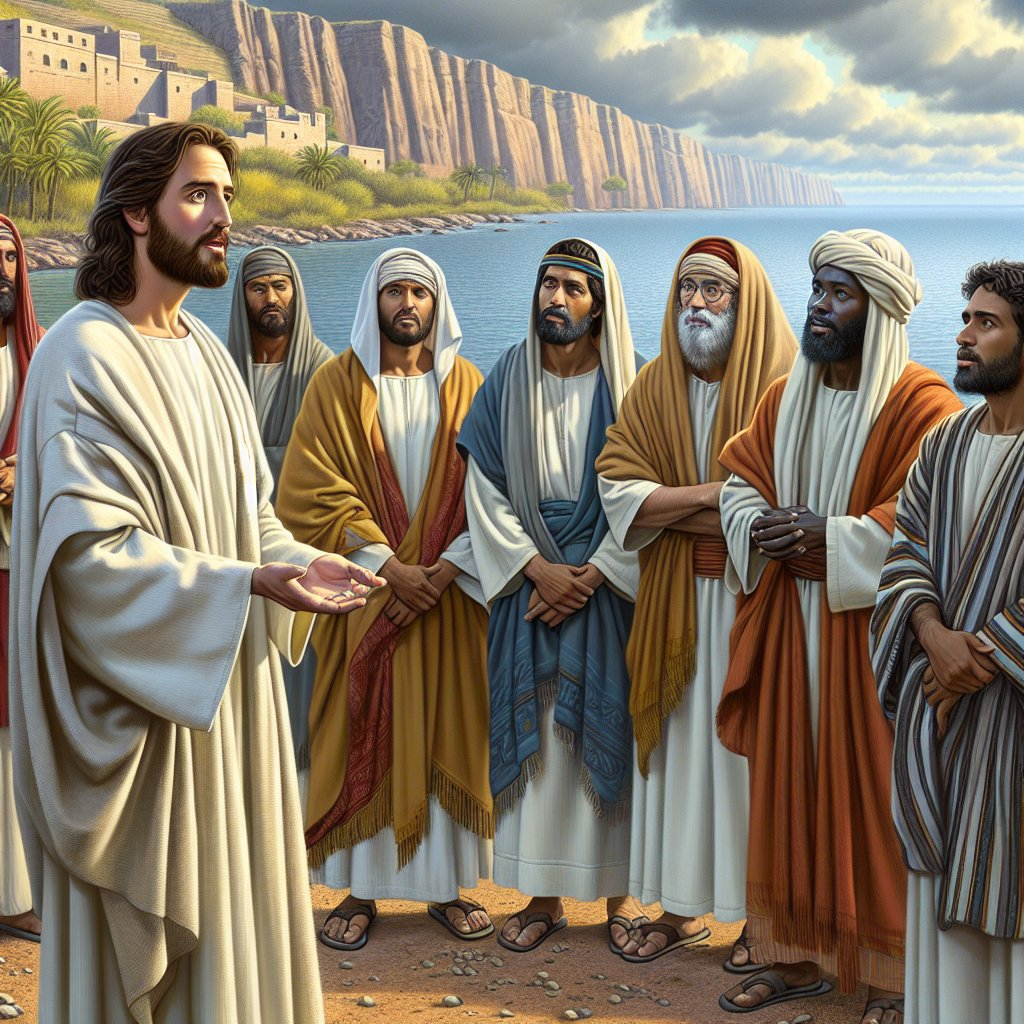
This is the hidden drama of today’s Gospel. Jesus asks his disciples, Who do people say that the Son of Man is? They answer with a list of names. John the Baptist. Elijah. Jeremiah. One of the prophets. These are not random guesses. They are projections. They reveal what the people were looking for. They tell us what the culture expected. And what the culture expected was not a carpenter from Nazareth. It was someone else. Someone familiar. Someone who fit the script.
John the Baptist. The fiery preacher. The voice in the wilderness. The one who called for repentance with unyielding urgency. But John was more than a preacher. He was a victim. Herod had beheaded him. And the people remembered. They remembered the violence. They remembered the injustice. And in their grief and rage, they projected onto Jesus the hope of vengeance. They wanted John to return. They wanted the prophet who had been silenced to rise and settle the score. But Jesus did not come to avenge. He came to forgive. He ate with sinners. He touched lepers. He spoke of mercy. He refused to be the instrument of their vengeance.
Elijah. The great wonder-worker. The one who called down fire from heaven. The one who defeated the prophets of Baal and slaughtered them at the river Kishon. Four hundred and fifty prophets. Slaughtered. The people who saw Jesus and said “Elijah” were not just looking for miracles. They were looking for violence dressed as righteousness. They wanted a God who would destroy enemies. They wanted a prophet who would purify the land with blood. They wanted the sword of divine judgment. But Jesus refused to call down fire. When James and John asked if they should command fire to come down on a Samaritan village that rejected him, Jesus rebuked them. He was not Elijah. He would not kill. He would be killed. He would not destroy. He would be destroyed. And in that destruction, he would reveal a different kind of power.
Jeremiah. The weeping prophet. The one who lamented the destruction of Jerusalem. The one who spoke of exile and desolation. The people who saw Jesus and said “Jeremiah” were looking for a prophet of doom. They were carrying their own fears and anxieties, their own sense that the world was ending. They wanted someone who would validate their despair. They wanted a voice that would confirm their worst fears. But Jesus spoke of a kingdom that was breaking in. He spoke of seeds and harvests. He spoke of mustard trees and leaven. He refused to be the prophet of their sorrow.
Each of these names tells us more about the one who spoke it than about Jesus. The people projected their needs, their fears, their hopes onto him. They wanted vengeance and he offered forgiveness. They wanted violence and he offered peace. They wanted despair confirmed and he offered hope. They wanted him to be who they needed him to be. They wanted him to perform a role. And Jesus, in asking the question, is gently exposing this. He is saying, They have named me. But their names are not me.
And then he turns to the disciples. But who do you say that I am?
This is the moment of personal reckoning. The crowd’s expectations are set aside. The voices of the culture are silenced. The projections of others are no longer the measure. What matters now is what Peter sees. What matters now is what Peter confesses. Not because Peter is smarter or holier. But because Peter has stopped looking at Jesus through the eyes of others. He has begun to see with his own eyes. He has begun to know with his own heart.
You are the Christ, the Son of the living God.
This is not a performance. It is not an answer given to please. It is an answer that comes from somewhere deeper. Jesus names the source. Flesh and blood has not revealed this to you. Not human opinion. Not cultural expectation. Not the pressure of the crowd. But my Father. The revelation comes from above. It comes from the place where we are truly known, beyond all the masks and roles and projections.
The need for validation is one of the most powerful forces in human life. We crave to be seen. We crave to be known. But we also crave to be validated in the roles we have chosen. We want others to confirm who we think we are. We want them to endorse our performance. And when they do not, we feel a deep unease. We feel unseen. We feel rejected. This is the universal human wound. We are born into a world of expectations. We are named before we know ourselves. And we spend our lives trying to live up to the names we have been given or trying to escape them.
Think of your own life. The names you have been given. The roles you have been assigned. The good child. The responsible one. The failure. The rebel. The one who always helps. The one who never quite measures up. These names are heavy. They shape us. They confine us. We act out of them. We speak out of them. And after a while, we cannot tell where the role ends and we begin. We become the performance. We forget that beneath the role there is a self that was never meant to be contained.
Jesus refused every role that was projected onto him. He was not John the Baptist returned for vengeance. He was not Elijah the slaughterer of prophets. He was not Jeremiah the voice of despair. He was himself. Fully. Completely. Without apology. And in being himself, he revealed what it means to be truly free. To live not for the validation of others but for the love of the Father.
I think of my own need for validation. How often I perform for the eyes of others. How often I shape myself to meet their expectations. How often I am afraid to be who I truly am because I fear their rejection. And then I hear the voice of Jesus. Who do you say that I am? And the question becomes: Who do I say that I am? Not who they say. Not who I perform. But who I am when no one is watching. Who I am in the presence of the Father.
The answer is not a role. The answer is a gift of being a child of God. The answer is the name that God speaks over me. A name that is not given by the crowd. A name that is not earned by performance. A name that is given freely. And that name is my true self. The self that is hidden in Christ. The self that no expectation can contain. The self that is finally, fully, unafraid to say, You are the Christ. And in knowing you, I am beginning to know who I truly am.



Leave a Reply