Year A- 4th Sunday of Easter
John 10:1-10
Fr. Jijo Kandamkulathy, CMF
Claretian Missionaries
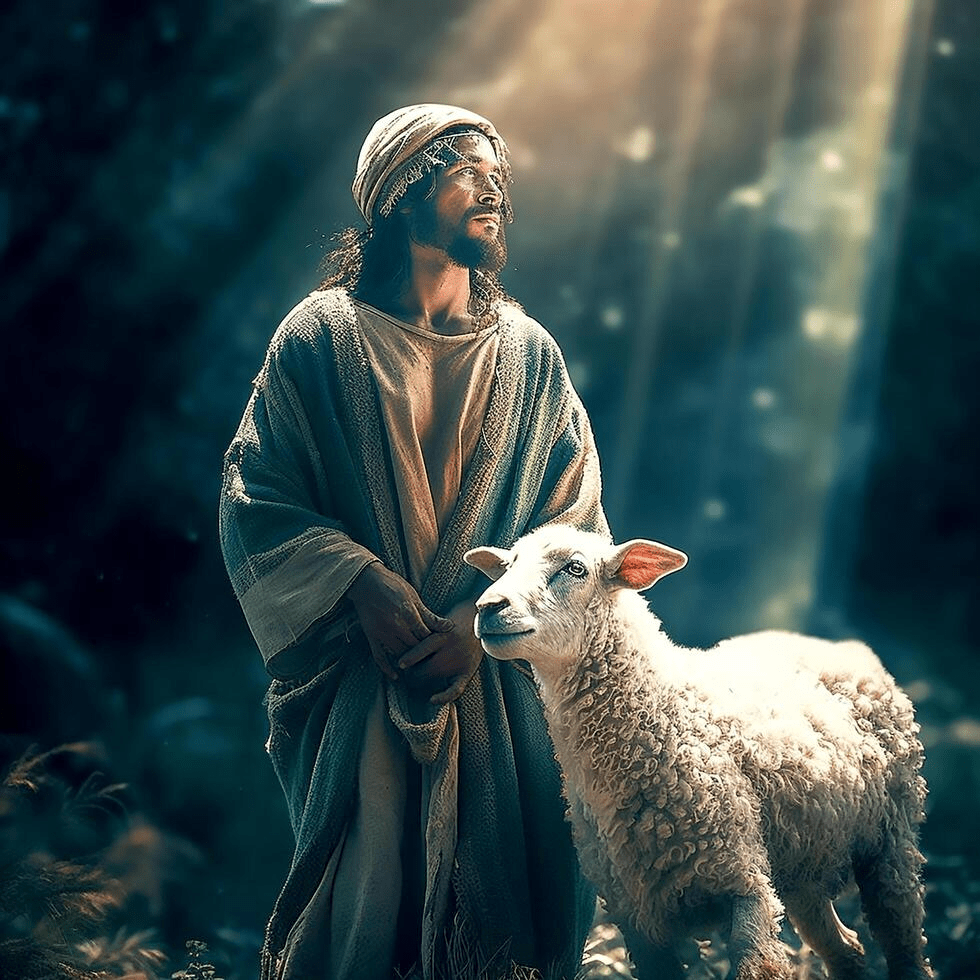
The Good Shepherd. Such a gentle and tender image, so stained-glass-window-perfect, that we have domesticated it. So familiar that we forget it is a metaphor. And worse, we forget that this metaphor about relationship asks something of us—not admiration, but listening.
The heart of the Gospel today is, “the sheep hear his voice.” Simple. But I have learned that the simplest sentences hide the deepest currents. Because if there is a voice I am meant to hear, then there are other voices too. Voices that sound almost the same. Voices that once belonged to shepherds I trusted. Voices that now lead me into confusion, or exhaustion, or a quiet despair I cannot name. I recognize the need to take time to discern well the voice of my Shepherd.
For years, personally, I have tried to cancel the space between the call and my response. I wanted immediacy. I wanted certainty. So I would open the Bible at random, point to a verse, and say, “This is for me.” It felt holy. It felt like surrender. But slowly, I came to see what I was doing: I was turning the living Word into a lottery ticket. Even the devil quoted scripture when he tempted Jesus. A random verse can satisfy curiosity, but it cannot form a heart. It bypasses the very thing the Shepherd most wants to teach me: discernment.
And discernment lives in a space. Viktor Frankl, who survived what no human should survive, wrote this: Between stimulus and response there is a space. In that space is our power to choose our response. In our response lies our growth and our freedom.
I have carried that sentence inside me since I read these lines. It has become a kind of prayer. Because here is the truth: most of us live as if that space does not exist. A word wounds us, and we strike back. An anxiety rises, and we medicate it. An opportunity appears, and we grasp it without asking where it comes from. We are reactive creatures—sheep easily scattered by any sound that carries the tone of authority or fear. The bad shepherds of this world know this. They do not need to chain us. They only need to eliminate the pause. Shout loud enough, fast enough, and we will follow anywhere.
But the Good Shepherd does not shout. He speaks. And speaking, unlike shouting, creates room. He does not force His voice into my skull. He offers it, and then He waits. That waiting is not passivity. It is the most active form of love. It is the love that respects my freedom so deeply that it will not overwhelm me, even to save me.
So how do we learn to hear Him? Not by magic. Not by speed. By slowness. By paying attention to the quality of the voice that calls me. We learn to pause. Just for a breath. In that pause, ask: What does this voice feel like in my body? Does it tighten my chest or open it? Does it make me smaller or larger? Does it whisper shame or sing mercy?
The Shepherd’s voice, never races. It never humiliates. It never demands an answer before I am ready. It sounds, oddly, like the psalm we learned as a children: The Lord is my shepherd, I shall not want. Not because we have everything, but because we are held. That psalm is not a statement of prosperity. It is a statement of trust. And trust takes time.
Sometimes we still wander. Sometimes we still mistake the wrong voice for the right one. But here is what startles us every time: the Shepherd does not wait at the gate with a lecture. He comes into the thicket where we have gotten myself lost. He lifts us—not by the collar, but over His shoulders. And He carries us home.
That is not a metaphor for magic. It is a metaphor for grace. And grace, like discernment, lives in the space between. Let us not rush. Let there be a pause between what calls me and what I do. In that pause, the Shepherd is not silent. He is singing. And slowly, imperfectly, learn to recognize the tune.



Leave a Reply