Second Sunday of Easter
Fr. Joan Ant. MATEO i García(Tremp, Lleida, Spain)
Today, on the Second Sunday of Easter, we complete the octave of this liturgical season, one of the two octaves —together with Christmas— that remain in the liturgy renewed by the Vatican Council II. For eight days, we contemplate the same mystery and try to deepen our understanding of it in the light of the Holy Spirit.
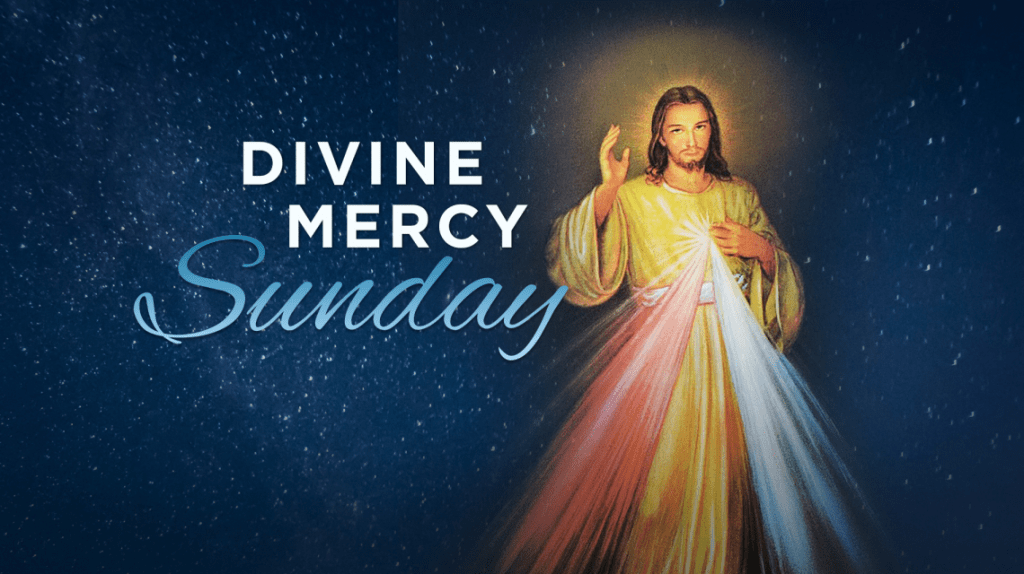
By the design of Pope Saint John Paul II, this Sunday is Divine Mercy Sunday. It is something that goes far beyond a particular devotion. As explained by the Holy Father in his encyclical Dives in Misericordia, Divine Mercy is the loving manifestation of God in a history wounded by sin. In Latin “Misericordia” (which means “mercy”) comes from two words: “miser” (misery) and “cor, cordis” (heart). God puts our unhappy situation due to sin in His Father’s heart, which is faithful to His plans. Jesus Christ, dead and risen, is the supreme manifestation and action of Divine Mercy. “God so loved the world that he gave his only Son” (Jn 3:16) and sent Him to death so that we might be saved. “To redeem the slave, He sacrificed the Son,” we proclaimed in the Easter Vigil. And once resurrected, He made Him a source of salvation for all who believe in Him. Through faith and conversion, we receive the treasure of Divine Mercy.
The Holy Mother Church, which wants her children to live the life of the Risen One, commands that we receive Holy Communion and do so in the grace of God —at least during the Easter season. Indeed, the Easter season is the opportune time for paschal fulfillment. It is a good time to confess our sins and to receive the forgiveness of our sins through the faculties that the risen Lord has conferred on his Church, when he said only to the Apostles: “Receive the Holy Spirit. Whose sins you forgive are forgiven them” (Jn 20:22-23). Thus, we will go to the sources of Divine Mercy. And let us not hesitate to bring our friends to these sources of life: the Eucharist and Penance. The risen Jesus counts on us.
Thoughts on Today’s Gospel
- “And from Thee, O Lord, unto whose eyes the abyss of man’s conscience is naked, what could be hidden in me though I would not confess it?.” (Saint Augustine)
- “Many times we think that going to confession is like going to the dry cleaner. But Jesus in the confessional is not a dry cleaner. Confession it is an encounter with Jesus but with this Jesus who waits for us just as we are.” (Francis)
- “Christ is at work in each of the sacraments. He personally addresses every sinner: ‘My son, your sins are forgiven’ (Mk 2;5). He is the physician tending each one of the sick who need him to cure them. He raises them up and reintegrates them into fraternal communion. Personal confession is thus the form most expressive of reconciliation with God and with the Church.” (Catechism Of The Catholic Church, Nº 1484)
 Homily Homes
Leave a comment