Jijo Kandamkulathy CMF
Claretian Missionaries
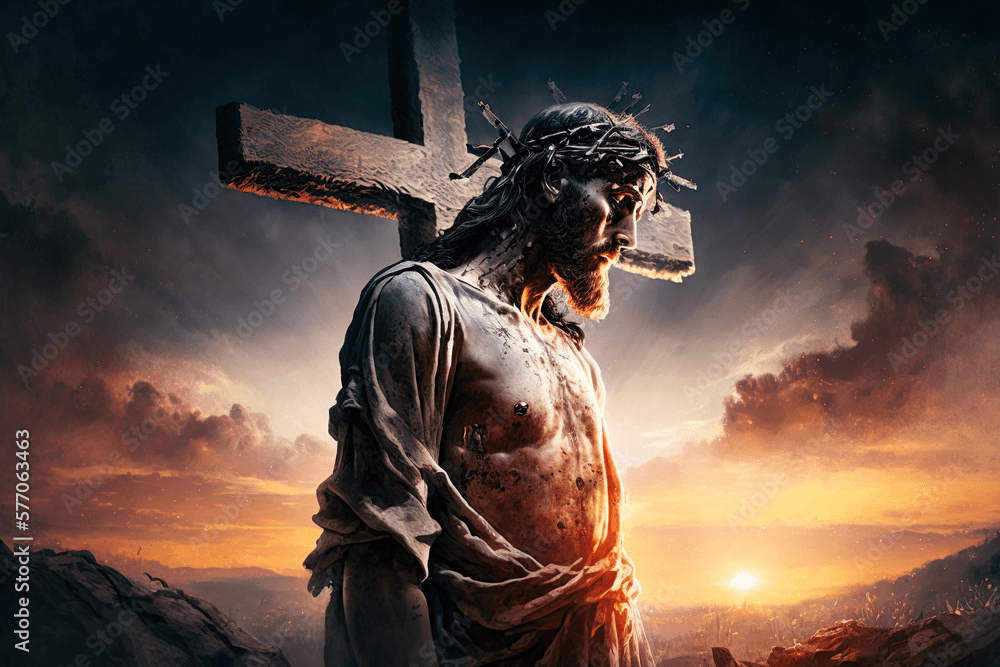
The world awakens to a day of contradiction. It is called “Good,” yet it remembers a brutal execution in history. It is a day of darkness, yet it unveils the deepest light. Good Friday is not a celebration—it is a confrontation. It is the day when humanity’s violence collides with God’s vulnerability, and the Cross becomes the stage where love refuses to die.
The trial is hurried, the verdict unjust. Pilate washes his hands, but history remembers his cowardice. The crowd cries “Crucify!” and the sentence is sealed. Jesus is led away, carrying the instrument of His death. The Cross is heavy, not only with wood but with the weight of human sin, betrayal, and fear. Each stumble is a mirror of our own weakness. Each lash is a reminder of our cruelty. Good Friday begins with condemnation, but it ends with communion.
On the hill of Golgotha, Jesus is stripped, nailed, and lifted high. Around Him, the crowd jeers, soldiers gamble, disciples scatter. Only a few remain—His mother, a beloved disciple, some faithful women. The loneliness of the Cross is profound. Abandonment pierces deeper than nails. The cry, “My God, my God, why have you forsaken me?” is not a loss of faith but the raw honesty of suffering. It is the prayer of every heart that has felt deserted, unheard, unloved.
Abandonment is the wound that shapes human fear. We dread being left alone, unseen, forgotten. Jesus enters that abyss. He does not bypass it; He inhabits it. In His cry, He sanctifies our cries. In His silence, He embraces our silence. Good Friday tells us that God is not absent in abandonment—God is present in the very experience of it.
The Cross is both execution and exaltation. Rome intended it as humiliation, a public warning to rebels. Yet in the mystery of faith, it becomes the throne of love. Power is redefined. No longer domination, but self‑emptying. No longer coercion, but compassion. The Cross is the paradox where weakness becomes strength, defeat becomes victory, death becomes life.
“This is the King of the Jews,” the inscription reads. It is meant as mockery, but it is truth. The kingship of Christ is revealed not in crowns but in thorns, not in armies but in forgiveness. “Father, forgive them, for they know not what they do.” These words echo across centuries, dismantling cycles of vengeance, opening paths of reconciliation. The Cross is not only a symbol—it is a strategy. It shows us how to live: by absorbing hatred without returning it, by breaking violence with mercy.
Two criminals hang beside Him. One mocks, the other pleads. “Remember me when you come into your kingdom.” Jesus replies, “Today you will be with me in paradise.” Even in agony, He offers hope. Even in death, He opens doors. The companions of the Cross remind us that salvation is not reserved for the perfect. It is offered to the penitent, the broken, the desperate. Good Friday is not about exclusion—it is about embrace.
At the foot of the Cross, Mary stands. Her presence is silent but eloquent. She does not flee, though her heart is pierced. She embodies fidelity in suffering. To her, Jesus entrusts the beloved disciple: “Woman, behold your son.” In this gesture, the Cross becomes family. It binds strangers into kinship. It creates community out of compassion. Good Friday is not only about death—it is about the birth of a new family, a new humanity.
Finally, Jesus breathes His last. “It is finished.” These words are not resignation but completion. The mission is fulfilled. Love has gone to the end. Then a silence, a silence that is heavy, cosmic. Then, the cosmic rumbles; the earth trembles, the veil of the temple is torn, creation itself reacts. The silence of Good Friday is not emptiness—it is fullness. It is the silence of seeds buried in soil, waiting to rise. It is the silence of love that has given all, holding nothing back.
Good Friday is not a spectacle to watch—it is an invitation to enter. The Cross is placed before us, not as decoration but as decision. Will we stand with the crowd, shouting “Crucify”? Will we flee with the disciples, hiding in fear? Or will we remain with Mary, standing in fidelity? The Cross demands response. It asks us to kneel, to listen, to surrender.
Good Friday calls us to confront our own violence, our own betrayals, our own cowardice. It asks us to recognize the ways we crucify love—through indifference, through injustice, through selfishness. Yet it also offers forgiveness. The Cross is not condemnation—it is invitation. It invites us to be healed, to be reconciled, to be transformed.
Good Friday is a summons to solidarity. To stand at the foot of the Cross is to stand with the crucified of history—the poor, the oppressed, the forgotten. It is to recognize Christ in the refugee, the prisoner, the victim of violence. The Cross is not only a past event—it is a present reality. Wherever human dignity is trampled, Christ is crucified again. To honor Good Friday is to commit ourselves to justice, compassion, and peace.
Good Friday ends not with answers but with silence. The tomb awaits, the stone will be rolled, the night will deepen. Yet within that silence, seeds of resurrection are sown. The Cross standing there will spread invisible roots, ready to sprout soon. The Cross is not the end—it is the threshold. It is the place where love has given all, where God has entered death, where hope is hidden but alive.
The silence of Good Friday speaks. It tells us that love is stronger than hate, that forgiveness is deeper than sin, that life is greater than death. It tells us that even in abandonment, God is present. It tells us that the Cross, once a symbol of shame, is now the sign of salvation.
Good Friday is not simply remembered—it is lived. Each time we choose mercy over revenge, service over pride, fidelity over fear, we live the Cross. Each time we stand with the suffering, we embody its meaning. Each time we surrender to love, we enter its silence.
And so we kneel. We kneel before the Cross, not in defeat but in faith. We kneel in silence, listening to the love that speaks without words. We kneel, waiting for the dawn that will break the tomb. We kneel, knowing that the silence of Good Friday is already pregnant with the Alleluia of Easter.
 Homily Homes
Leave a comment