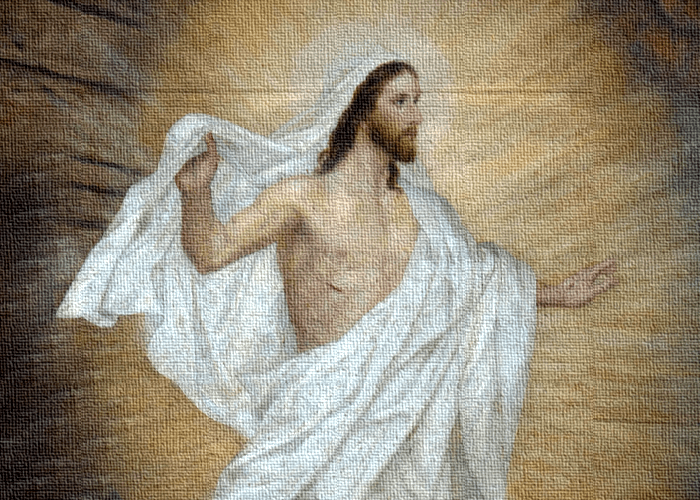
Year A: Easter Sunday
Fr. Jijo Kandamkulathy CMF
Claretian Missionaries
Alleluia! Christ is risen!
The dawn of Easter begins not with certainty but with trembling hearts. The women rise early, carrying spices, their minds heavy with grief. They expect to meet death, to perform one last act of love for a body silenced by violence. Yet what they encounter is absence—the stone rolled away, the tomb empty. Confusion floods them. Their tears blur vision, their sorrow clouds recognition.
The women embody the human struggle with loss: the need to cling to what is gone, the fear of facing a future without the beloved. Their journey to the tomb is an act of fidelity, but also of despair. They come to preserve memory, not to expect life. And yet, in their vulnerability, they become the first witnesses of the impossible.
The emptiness unsettles them. It is not proof, but provocation. It forces them to confront the limits of their expectations. They had prepared for closure, but God opens a beginning. Their bewilderment is the necessary threshold of faith: before joy, there is confusion; before proclamation, there is silence.
In psychological terms, the empty tomb dismantles their grief narrative. It interrupts the story they had rehearsed—that death is final, that hope is buried. The shock destabilizes them, but it also liberates them. It creates space for recognition, for encounter, for transformation.
The resurrection is inevitable—not only because Jesus is the Son of God, but because the causes He championed could not be abandoned. He stood for the poor, the excluded, the broken. He proclaimed a kingdom where the last are first, where mercy triumphs over judgment, where love dismantles fear. Such a vision cannot be buried. It demands continuation.
If Jesus had remained in the tomb, His mission would have ended in tragedy. But resurrection is God’s affirmation that His cause must go on. The kingdom He proclaimed is not silenced by nails or sealed by stones. It rises because truth cannot be extinguished, because justice cannot be buried, because love cannot be killed.
The women at the tomb embody this inevitability. Their fidelity, their refusal to abandon Him even in death, becomes the seed of proclamation. They carry the message forward, ensuring that His mission continues. Resurrection is not only divine miracle—it is divine necessity. It is the guarantee that the story of Jesus does not end in defeat but in fulfillment.
The disciples hide behind locked doors, paralyzed by fear. Jesus enters, offering peace. He shows His wounds, not erased but transfigured. Resurrection does not deny suffering; it redeems it. The scars remain, but they become signs of victory.
Our personal traumas also do not vanish, but they can be integrated. Pain does not disappear, but it can be transformed. The resurrection teaches us that wounds can become witnesses, scars can become stories of grace. The inevitability of resurrection is not escape from suffering—it is the transformation of suffering into meaning.
“Go and tell my brothers.” “As the Father has sent me, so I send you.” Resurrection is not private consolation—it is public commission. The women, the disciples, the community are sent to continue His cause. The kingdom must be proclaimed, the poor must be lifted, the broken must be healed.
The inevitability of resurrection is also the inevitability of mission. To abandon His cause would be to betray His life. To proclaim resurrection is to commit to justice, mercy, and love. Easter is not only about life after death—it is about life before death, lived with courage and compassion.
And so we proclaim: Christ is risen. His cause is alive. His kingdom is inevitable. Alleluia.
 Homily Homes
Leave a comment