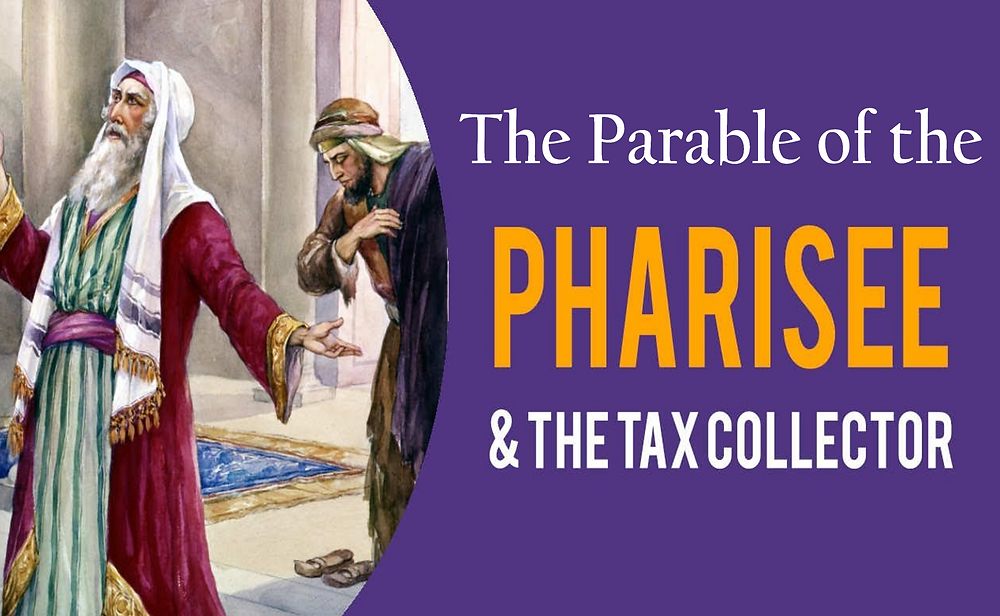
The parable today about the tax collector and the Pharisee in the Temple leads me to ask you this question: Why are you here? Why am I here? Why are we in Church right now? I am sure that there are very few people whose motivation is that of the Pharisee. Spiritual arrogance is not a characteristic of the vast majority of Catholics. I am sure that even those who are told that they are the faithful Catholics as compared to the rest of us do not really believe that. I do not believe that there is anyone here who wishes to demonstrate by his or her presence that they are better than anyone else. I do not believe there is a person here who would look at anyone else here and say, “Well, at least I’m not as bad as that guy.”
Our basic motivation for being here is that we need God in our lives and in our families. I can see that in so many of you as you enter the Church. It is such a joy as a priest to see people coming to Mass. You shine with your desire to be here. I love seeing so many couples coming holding hands, be they newly weds or married 50+ years. You are thanking God for bringing you together. You might say, “He drives me crazy at times; she drives me crazy at times, but he/she is my crazy and I love that. I love seeing the young families coming with their children. Sometimes the parents look like they have done a full day’s work just getting the children up, and washed and fed.
One Mom asked me to do a better job blessing her kids this week. But still, you are delighted to be here with your families. All who come here want to receive the Eucharist and to thank God in that special presence. W e all come here to worship God and say by our presence, “This is who we are. We are Catholics. We come together to be united to the Lord and each other in the Eucharist.
The tax collector didn’t make any comparisons, nor did he try to remind God of any of the good things he had done in his life. He didn’t say, “I know I’ve done wrong, collecting taxes for the Romans from my own people and making a profit on it for myself, but I also fed my neighbor’s family when he died suddenly, and I routinely give alms to beggars.” Nor did he say, “Lord, I am not an arrogant man, like that Pharisee.” His prayer was simply, “Lord, have mercy on me a sinner.”
The parable reaches to the core of our relationship with God. God chooses us. He establishes the relationship. We haven’t won this relationship with our prayers, or our actions. God has chosen us. And this has not been easy. It has taken an infinite struggle on his part. This struggle included the struggle for people in general, necessitating his becoming one of his people to re-establish obedience to the Father through the sacrificial love of the cross. The struggle also includes the Lord’s continual effort to win each of us into his love as individuals. So often, God has had to be that Hound of Heaven that Francis Thompson spoke of. Do you remember that poem?
It began: I fled him, down the nights and down the days; I fled him down the arche of the years; I fled him down the labyrinthine ways of my own mind; and in the midst of tears I hid from him. God is determined to form a relationship with each of us. But so often we have run from Him. When we realize that God has chosen us as individuals, that He loves each of us, and when we consider how we have resisted Him, we realize that our prayer must begin with, “Have mercy on me a sinner.”
Catholicism is often accused of putting people on guilt trips. This is not true. Catholicism puts people on reality trips. Catholicism dares to speak about unpopular topics like sin. Catholicism dares to invite people to consider their own participation in sin and seek forgiveness. It recognizes that our salvation is a process we are engaged in. We are being saved. It recognizes that we are human beings and that we can give in to temptation to sin. It tells us that the Lord was one of us. He experienced what temptation was and he understands our need for mercy. He gives the sacrament of mercy, penance, because he wants his mercy, not our guilt directing our lives.
Catholicism is not concerned with guilt. It is concerned with mercy. People are continually telling their priests how much they need the Mercy of God. They are realists. We all need the mercy of God. As we come to a deeper understanding of all that God has done for us, we also come to a deeper understanding of how much we need his mercy and forgiveness. The greatest saints, Francis of Assisi, Teresa of Avila, John Paul II, Teresa of Calcutta and all the great saints were people who saw
themselves as great sinners because they had a profound realization of the extent of God’s love for them and the many times they had not returned His love.
The parable today leaves us with what the Middle Ages called “the pilgrim’s prayer.” The pilgrim’s prayer is simple and profound. It is the prayer of the man in the back of the Temple who realized that he is totally dependent on God’s love, a love that he had often rejected. The pilgrim’s prayer is the prayer that we all need to say with our hearts throughout our day, “O Lord, have mercy on me a sinner.”
A pharisee and a tax collector come into the Temple. Both are there to pray. Only one is humble enough to recognize his need for the healing hand of God. Only one prays because only one realizes that he really needs God. And that one leaves in the embrace of the Lord’s love.
And that is who we are. We are here, all of us and each of us, because we have a profouind realization of how much we need God.
Homily Homes
The Preachers’ Guide
FOLLOW US
NEXT SUNDAY’S HOMILY
Quote of the week
On Christian compassion: “What! To be a Christian and not weep with an afflicted brother he sees or not feel sick with one who is sick! This is to be without charity; it is to be a caricature of a Christian; it is to lack humanity; it is to be worse than the beasts.”
~ St. Vincent de Paul
INSPIRING REFLECTIONS

Homily Homes
About
Inspiring and exegetically based homilies from various priests from around the world.
CATEGORIES
visitors
254 hits
 Homily Homes
Leave a comment